
A Problem with a Solution:
Iran Can Enrich and Not Get the Bomb
by Cesar Jaramillo | April 16, 2026
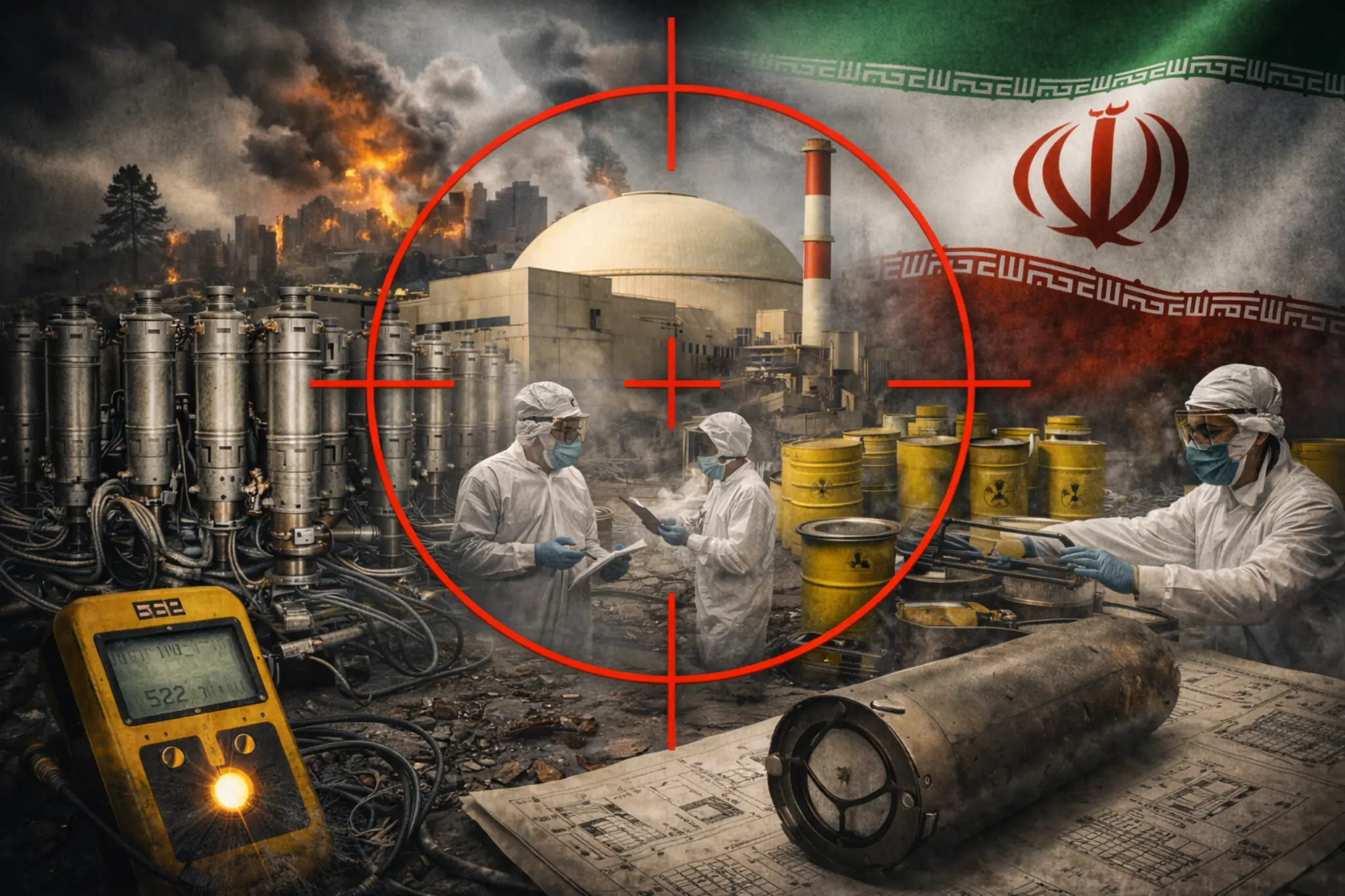
The central dispute over Iran’s nuclear program is widely portrayed as irreconcilable, but it is not. The United States insists that Iran must not acquire a nuclear weapon. Iran insists that it will not renounce its right to enrich uranium. Both objectives are achievable and have been achieved before.
The problem is not incompatibility. Yet the public is repeatedly told that these positions are fundamentally at odds with each other. This misframing reinforces the perception that diplomacy has run its course and that the failure to reach agreement reflects an intractable reality rather than a political choice. In fact, the current impasse is not the result of irreconcilable positions, but of abandoning a diplomatic model that successfully reconciled them.
To a significant extent, this is a crisis of political choice. The 2015 Joint Comprehensive Plan of Action (JCPOA) established a framework that was both technically sound and diplomatically viable: verifiable limits on Iran’s nuclear program in exchange for sanctions relief. Under the agreement, Iran enriched uranium under strict limits, reduced its stockpiles, and dismantled key elements of its nuclear infrastructure.
The agreement was backed by broad international support and multilateral legitimacy. Iran’s compliance was monitored and repeatedly verified by the International Atomic Energy Agency, with the support of the European Union, China, Russia, and the United States.
That framework began to unravel in 2018, when the United States, under President Donald Trump, unilaterally withdrew from the agreement despite Iran’s compliance and in contravention of UN Security Council Resolution 2231. The withdrawal did not expose a failure in the deal’s technical provisions, but it did remove the incentives and assurances that sustained it. Critically, Iran’s departure from key enrichment limits was not the cause of the deal’s collapse, but its consequence.
Under the JCPOA, the international community operated under a simple and effective premise: Iran could retain a limited, peaceful nuclear program while being prevented from developing a weapon. The objectives now treated as incompatible were not only compatible; they were successfully implemented and verified.
The collapse of that framework removed constraints that had effectively capped enrichment, extended breakout timelines, and ensured continuous international oversight. What followed was not the failure of diplomacy, but the absence of it.
From Manageable Limits to Unworkable Absolutes
What has replaced that model is anything but a more effective strategy. Where negotiations once focused on enrichment levels, stockpiles, and timelines, they are now reduced to a binary demand: enrich or not at all. This shift has not simplified the problem. It has made it unsolvable.
At recent high-level negotiations, the divide has remained unchanged. The United States has insisted on zero enrichment. Iran has rejected this, reiterating a consistent position: it is prepared to provide credible assurances that it will not pursue nuclear weapons, but not to surrender rights afforded under the Nuclear Non-Proliferation Treaty.
At the same time, what was once a focused non-proliferation issue has been steadily expanded. Missile capabilities, regional behaviour, and broader geopolitical conduct have been layered onto the nuclear file. Each may be a legitimate concern. Together, they transform a solvable problem into an open-ended confrontation.
This expansion also raises a more fundamental question about the true, overriding objectives of the Trump administration.
The case for military action against Iran has been marked by shifting and often contradictory claims, including disputed assertions about the imminence of an Iranian nuclear threat. For decades, Benjamin Netanyahu has warned that Iran is “weeks away” from a bomb. That claim has steadily lost credibility, not only with the public, but also in light of assessments from the U.S.’s own intelligence community, which has not concluded that Iran has decided to build a weapon.
Israel’s leadership has consistently pressed successive U.S. administrations to take military action against Iran. And while previous presidents resisted, President Trump obliged. In that context, the question of how to ensure that Iran does not get the bomb may matter less than assumed. Even a workable solution may not suffice if the United States and Israel are on a war footing, no matter what.
This tension is compounded by a deeper credibility problem that continues to undermine the global non-proliferation regime. The states most forcefully insisting that Iran must never acquire a nuclear weapon are themselves nuclear-armed, while Israel, widely understood to possess such weapons, remains outside the Nuclear Non-Proliferation Treaty altogether.
The issue is not simply one of perceived hypocrisy, even if that perception is indeed widespread. It is that the uneven application of nuclear norms erodes the legitimacy of the rules themselves. This does not legitimize proliferation, but it does erode the credibility of efforts to prevent it.
A Practical Way Forward
A viable solution does not require either side to abandon its core objective, but to structure those objectives so they can coexist. A temporary suspension of enrichment, limited to one or two years, could provide a realistic starting point. This is not capitulation for either side. It is a stabilizing measure that creates space for diplomacy, while allowing both sides to save face with their domestic audiences.
During this period, two parallel tracks would advance.
First, the design and implementation of a robust, modern verification regime under the International Atomic Energy Agency, capable of providing continuous assurance that Iran’s program remains exclusively peaceful.
Second, the delivery of meaningful sanctions relief. This is not a concession. It is a structural requirement of any agreement. Without it, compliance is neither politically sustainable nor economically rational.
At the conclusion of this period, enrichment could resume under strict, transparent, and enforceable limits, building on the JCPOA framework while addressing any legitimate gaps identified in its implementation. This would not be a return to the past, but an updated version of a model that has already demonstrated its effectiveness.
The outcome is straightforward. The United States secures its core objective: Iran does not acquire a nuclear weapon. Iran retains its right to peaceful nuclear activity. Both sides can credibly claim a measure of success, even in the shadow of a deeply destructive conflict.
The tragedy of the current moment is not that the problem is unsolvable. It is that it has been reframed in ways that make a solution appear unattainable. Transforming “Iran must not get the bomb” into “Iran must not enrich” abandons diplomatic realism in favour of an absolutist demand that cannot be met. It replaces a workable framework and helps justify a dangerous and escalating conflict.
The objective that Iran must not acquire a nuclear weapon remains valid and unchanged. But that objective requires limits, verification, and reciprocal commitments grounded in reality, not absolutism.
The devastating war now unfolding is the product of political choice, not strategic necessity. And the solution to the central issue driving it lies in recognizing what has long been true: Iran can enrich and not get the bomb.
Cesar Jaramillo is Executive Director at SANE Policy Institute.