
Gaza Genocide Must Be Called Out – With or Without an ICJ Ruling
by Cesar Jaramillo | September 29, 2025
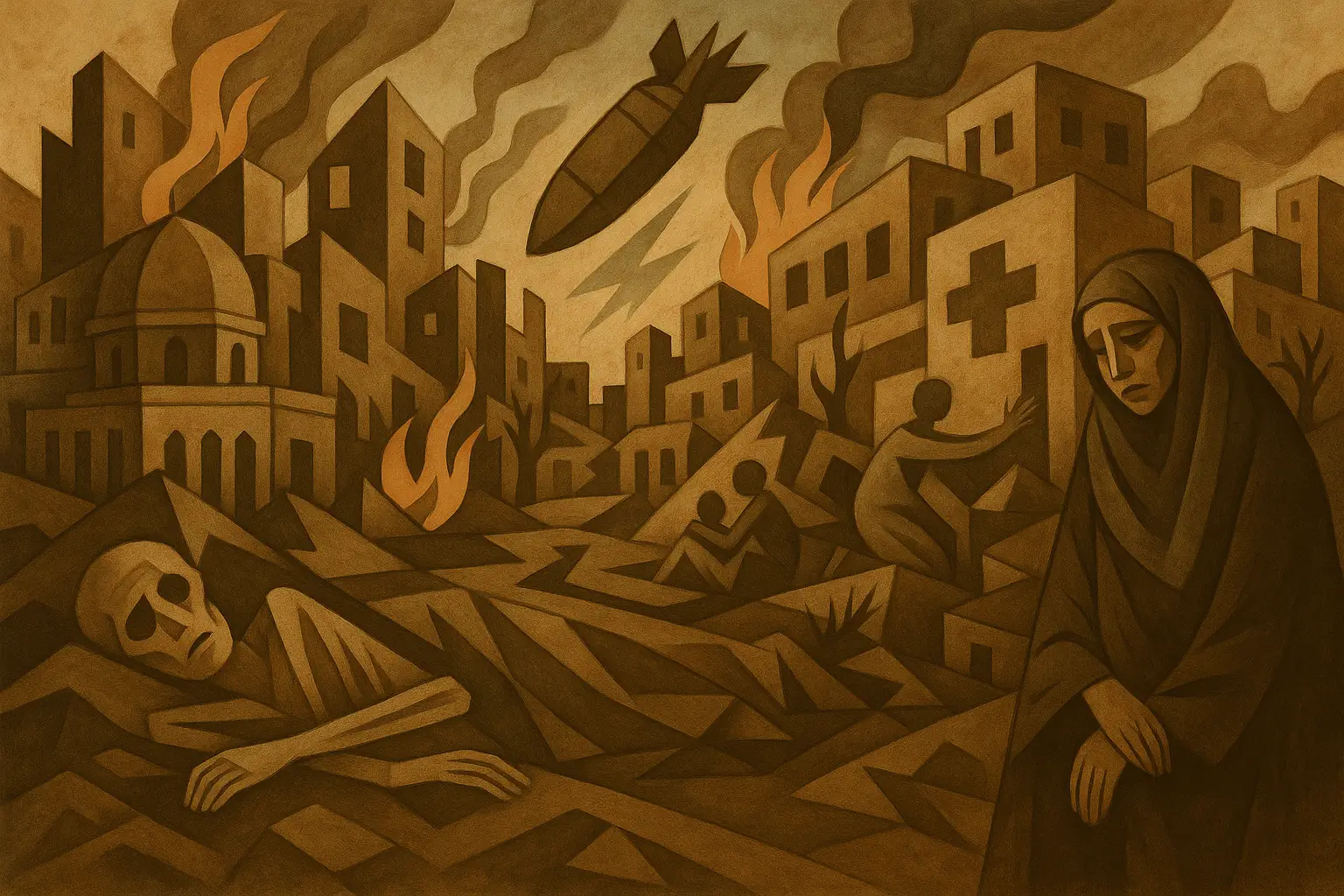
Israel is committing genocide in Gaza. This is not a speculative charge but a conclusion supported by overwhelming evidence from United Nations agencies, human rights organizations, independent journalists, and even Israel’s own military data. Yet many continue to insist that the genocide unfolding in plain sight and in real time cannot be recognized as such until the International Court of Justice (ICJ) issues a formal ruling.
Recognition of genocide has often preceded judicial determinations. In Rwanda, Darfur, Cambodia, and Bosnia, governments, experts, and international institutions identified genocidal crimes long before tribunals or courts issued final rulings. The ICJ itself has already acknowledged the plausibility of genocide in Gaza through provisional measures. This alone should have prompted decisive preventive action. To insist on awaiting a definitive judgment years from now risks ensuring that recognition comes only after the devastation is irreversible.
Each day of equivocation allows destruction to become entrenched. Famine, displacement, and the deliberate targeting of civilians have been documented with rigour by UN agencies and independent experts. The Israeli government has obstructed humanitarian access, flattened entire neighborhoods, and systematically displaced nearly two million people. Its own military data show that the overwhelming majority of Palestinians killed are civilians.
To frame this only as a humanitarian crisis while avoiding the legal and moral clarity of genocide is to obscure the deliberate policies behind the suffering.
Naming the Obvious
In September 2004, the United States declared that genocide was underway in Darfur. The determination was made on the basis of overwhelming evidence, long before the International Criminal Court acted and without waiting for an ICJ ruling. It was a political and moral judgment, not a judicial one, and no less valid for that fact.
In 2016, Canada officially declared that ISIS atrocities against Yazidis constituted genocide and called on the UN Security Council to establish a mechanism to investigate crimes committed by ISIS. The recognition of genocide came months before the United Nations or any tribunal issued a formal judgment. It was a statement of conscience, not a legal ruling, but it marked an important stand.
In December 2021, the European Parliament described the treatment of Uyghurs in Xinjiang as crimes against humanity and carrying a serious risk of genocide. Legislators acted because the evidence was sufficient and the urgency undeniable, even absent a court ruling.
In March 2022, the UN Human Rights Council concluded that Myanmar’s campaign against the Rohingya met the threshold of genocide. Again, there was no ICJ ruling in hand, but the facts compelled action.
Srebrenica provides another clear example. The massacre was widely denounced as genocide years before the ICJ formally recognized it in 2007. Political and moral recognition preceded judicial confirmation, underscoring that court rulings are not a prerequisite for acknowledging and denouncing genocide.
Rwanda, by contrast, shows the tragic cost of hesitation. Governments in 1994 deliberately avoided calling it genocide, despite overwhelming evidence, and the international community’s failure to act in real time remains a permanent stain on humanity’s conscience.
Recognition of genocide can and must precede ICJ rulings in the face of clear evidence. To wait is to risk irrelevance, irreparability of harm, or complicity.
Genocide in Real Time
In Gaza, the genocide is not hypothetical or abstract. More than 65,000 Palestinians have been killed in less than two years, with recent findings suggesting that fifteen out of every sixteen of those killed are civilians. This is not an unfortunate by-product of war but the predictable outcome of a deliberate campaign.
Israel has deliberately blocked food, water, medicine, and fuel from reaching Gaza’s population. Humanitarian distribution centres have been not only ineffective but also sites of orchestrated killing and enforced disappearance. The United Nations has confirmed that Gaza is descending into massive famine. Starvation here is not collateral damage. It is a weapon of war, consciously deployed.
Hospitals have been bombed nearly 2,000 times, killing patients and staff and leaving healthcare in ruins. Schools, shelters, and entire neighborhoods have been flattened.
Ninety percent of Gaza’s 2.1 million people — about 1.9 million individuals — have been forced from their homes. This is not displacement as a side effect of combat. It is displacement as policy, aimed at uprooting a people and erasing their communities.
In the West Bank, settler violence and expanding illegal settlements have compounded the destruction. Since October 2023, more than 2,000 attacks by settlers have killed over 1,000 Palestinians and displaced at least 1,500 more. This is part of the same campaign: the systematic theft of land and the removal of Palestinians from it.
The suppression of witnesses has been equally brutal. More than 210 journalists have been killed, at least 56 deliberately targeted, in what has become the deadliest war for reporters in modern history. Aid workers too have been killed in unprecedented numbers, in a pattern that cannot be dismissed as accident.
Meanwhile, thousands of Palestinians have been arbitrarily detained and subjected to torture, inhumane treatment, and sexual violence. A UN Commission has documented systematic gender-based violence across the occupied territories since October 2023, identifying it as part of Israel’s broader campaign of genocide and obstruction of Palestinian self-determination.
What is unfolding in Gaza is not only the destruction of lives but the deliberate creation of conditions that will be impossible to reverse. Once land is seized, neighborhoods demolished, and populations scattered, no court ruling will restore them. These actions are the nails in the coffin of a two-state solution.
Israel’s expansionist and annexationist objectives are plain to see, not least because top Israeli officials have made no secret of their intentions. The forced displacement of Palestinians and the erasure of their civic and cultural life are not unintended results of this conflict but its goals.
The Duty to Act
The obligations of states under the Genocide Convention are preventive, not retrospective. Signatories are required to act to prevent genocide once there is a serious risk, not only after it has been judicially certified. To suggest otherwise is to erode the very purpose of the Convention.
It must therefore be stated clearly: the deliberate targeting of Palestinians through mass killings, forced displacement, the destruction of life-sustaining infrastructure, the use of starvation as a weapon, and the obstruction of humanitarian aid — coupled with the well-documented statements of intent from senior Israeli officials — meets the threshold of genocide under international law.
History shows that states and institutions have recognized genocide without waiting for judicial confirmation. These were not premature judgments. They were necessary acts of political and moral responsibility.
So it is today with Gaza. Waiting for the ICJ to issue a formal ruling ignores both precedent and obligation. By the time such a ruling comes, if it ever does, more lives will be lost, more will be displaced, and the conditions for Palestinian life and statehood irreversibly destroyed. A judgment rendered after the fact cannot undo the crime.
Genocide must be called by its name now — or history will record not only the atrocity itself, but also the silence of those who had the chance to stop it.
Cesar Jaramillo is Executive Director at SANE Policy Institute.