
Bleak Outlook for the 2026 NPT Review Conference
by Cesar Jaramillo | June 11, 2025
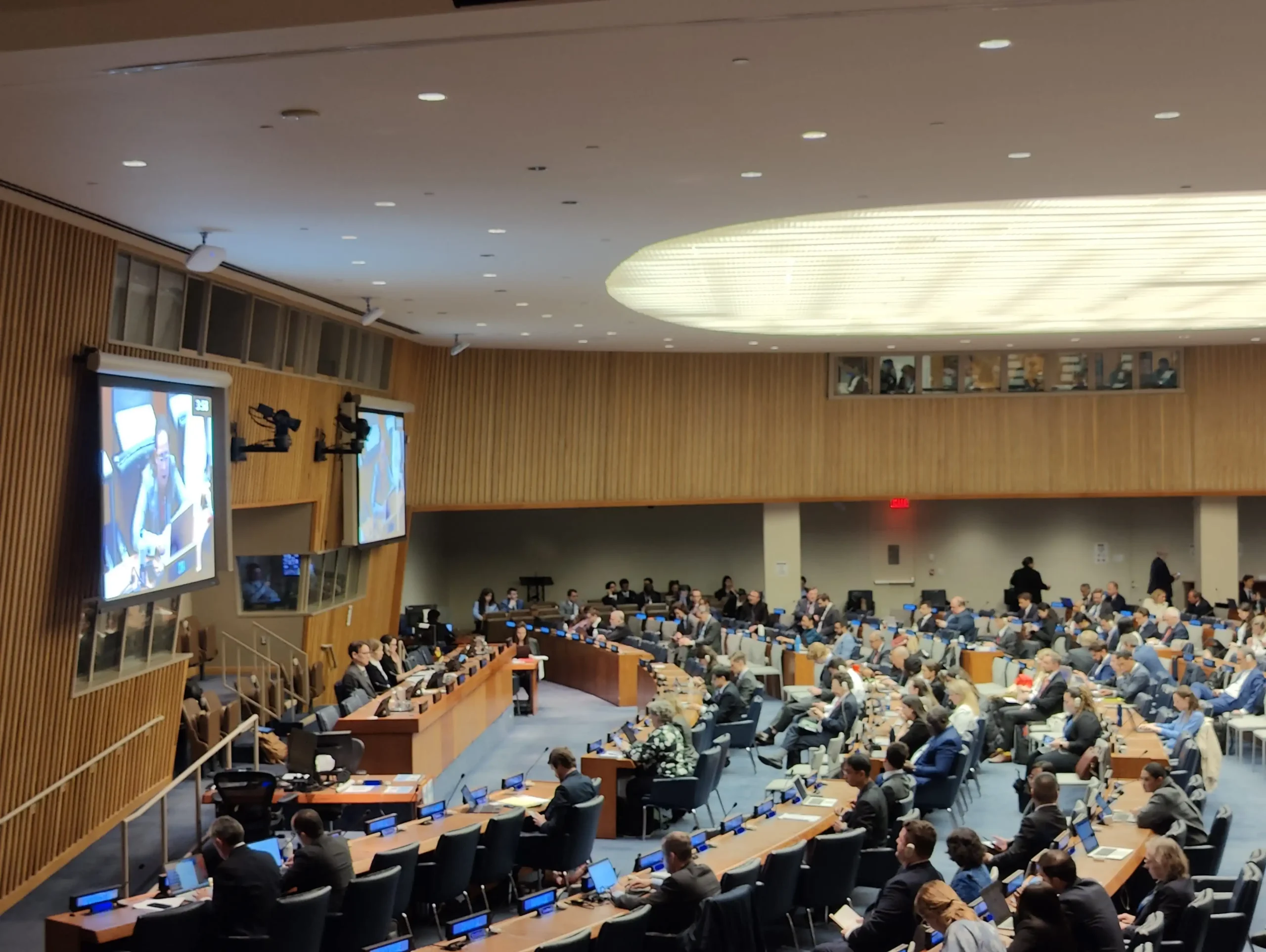
Another NPT Preparatory Committee came and went earlier this year. Another failure to adopt even a modest package of recommendations. Another performance of carefully rehearsed positions that all participants could have predicted, because those positions have been stated countless times before.
Like a broken record, the same fault lines emerge every time. The same red lines are drawn and defended with familiar rigidity. Unsurprisingly, the result is the same: failure to advance the Treaty’s disarmament obligations in any meaningful way.
With a year to go until the 2026 NPT Review Conference, it is worth previewing the likely points of contention that will again stymie progress. These are not theoretical disputes. They are the well-known, entirely familiar, and by now ritualized obstacles that have derailed previous conferences and are poised to do so again unless key positions shift.
Nuclear Sharing
One of the most persistent and polarizing debates centers on the legitimacy of nuclear sharing arrangements, particularly within NATO. Several states contend, rightly and forcefully, that the deployment of U.S. nuclear weapons on the territories of non-nuclear-weapon states violates Articles I and II of the NPT, which prohibit both the transfer and the acceptance of nuclear weapons.
In response, NATO states routinely argue that these arrangements are consistent with the Treaty, emphasizing that the United States retains ownership and control of the weapons at all times. Yet this legal interpretation remains unpersuasive to many states and has not evolved over decades of debate. The positions on either side are entrenched, and the resulting impasse has become a defining feature of NPT stalemates.
The unwillingness to address this issue head-on not only perpetuates legal ambiguity but also undermines the credibility of the Treaty’s non-proliferation norms.
Concrete Disarmament Commitments
Another longstanding roadblock is the refusal by nuclear-armed states to accept concrete, time-bound disarmament obligations. Despite repeated calls from a majority of states parties for the adoption of clear timelines, verifiable targets, and measurable benchmarks, the nuclear-weapon states continue to fall back on abstract reaffirmations of their “unequivocal undertaking” to pursue disarmament under Article VI.
This vague language, unaccompanied by credible implementation pathways, has become a hollow refrain. At the same time, these same states are engaged in the expansion or modernization of their nuclear arsenals. Such actions are wholly incompatible with a genuine commitment to eventual elimination.
The pattern is unmistakable: rhetorical gestures substitute for strategic intent. And the rest of the world is increasingly unwilling to accept this disconnect as a good-faith posture.
Nuclear Weapons Modernization
Closely related is the continuing modernization of nuclear arsenals, a trend that shows no signs of slowing. Most NPT states have voiced deep concern over the qualitative and quantitative enhancements being made to both nuclear warheads and delivery systems. These upgrades often involve new capabilities, increased accuracy, and greater survivability, developments that raise serious questions about compliance with the spirit of Article VI.
Nuclear-armed states often portray modernization efforts as routine maintenance aimed at ensuring safety, security, and reliability. But this framing masks the reality that such investments entrench nuclear weapons as central elements of national security policy for the long term.
So long as modernization proceeds without restraint, the disarmament agenda cannot move forward. No amount of technical reassurance can obscure the political implications of renewing nuclear arsenals instead of retiring them.
The TPNW
The Treaty on the Prohibition of Nuclear Weapons (TPNW) represents the clearest expression to date of the humanitarian imperative behind nuclear abolition. It has introduced new legal norms, shifted the disarmament discourse, and created mechanisms for victim assistance and environmental remediation.
Yet within NPT proceedings, the TPNW is rarely acknowledged beyond passing references. It is treated as marginal rather than meaningful, an external initiative rather than an integral part of the broader disarmament landscape.
This is no accident. For nuclear-armed states and their allies, engaging meaningfully with the TPNW would expose the gap between their rhetorical support for disarmament and the policy reality of indefinite deterrence. Instead of embracing the Treaty’s contributions, they sidestep them, reinforcing the perception that their disarmament commitments are not only slow but insincere.
Nuclear Risk Reduction
Discussions on nuclear risk reduction are likely to feature prominently at the 2026 Review Conference. These conversations typically focus on the dangers of accidental launch, technical malfunction, or unauthorized use, important issues that deserve attention.
However, the growing emphasis on risk reduction has become a convenient substitute for actual disarmament. By focusing on ways to manage the dangers of nuclear weapons rather than eliminate them, nuclear-armed states appear engaged and responsible without challenging the status quo.
Risk reduction, while important, cannot be allowed to obscure the need for structural change. Without firm commitments to reduce arsenals, de-alert weapons, and limit their role in military doctrines, risk reduction becomes a mechanism for sustaining nuclear weapons indefinitely, not a bridge to their elimination.
Extended Deterrence and the Role of Nuclear-Dependent States
The doctrine of extended nuclear deterrence, whereby nuclear-armed states extend nuclear protection to their non-nuclear allies, continues to generate growing criticism. China and others have argued that such arrangements distort the obligations of non-nuclear-weapon states under the Treaty and entrench global reliance on nuclear weapons far beyond the states that actually possess them.
Proponents, particularly within NATO and among U.S. allies in the Asia-Pacific, defend extended deterrence as a critical component of their security architecture. But the contradiction is glaring. The NPT envisions the progressive marginalization and eventual elimination of nuclear weapons from security policies, while extended deterrence reinforces their centrality.
This tension remains unresolved and will likely remain a flashpoint, especially as calls to reduce the salience of nuclear weapons continue to grow.
More broadly, it is increasingly clear that the problem is not limited to nuclear-armed states. A third category—non-nuclear-weapon states that rely on nuclear deterrence—plays an enabling role in maintaining the nuclear status quo. By sheltering under nuclear umbrellas and defending alliance-based deterrence strategies, these states—many of them among the most vocal supporters of disarmament rhetoric—undermine their own credibility.
This duality weakens the Treaty regime and provides political cover for indefinite nuclear retention. Until nuclear-dependent states resolve the contradiction between their disarmament advocacy and their strategic reliance on nuclear weapons, meaningful progress will remain elusive.
Recalibrating Expectations
None of these issues are new. None are unexpected. And none are likely to be resolved unless key states show a willingness to move beyond long-standing red lines. The persistence of these unresolved disputes across multiple review cycles reflects a deeper malaise in the credibility and effectiveness of the NPT process.
For now, the NPT remains a foundational element of the global nuclear order, with a near-universal membership and a unique legal framework. But if the 2026 Review Conference is to be more than another carefully choreographed exercise in diplomatic obstruction, a different level of political courage will be needed, especially from those states whose disarmament obligations remain unmet—and from those whose dependence on nuclear deterrence continues to quietly sustain the system.
As it stands, the outcome of the 2026 RevCon is all but predetermined, barring a meaningful shift in political will. Without such a shift, what lies ahead is not just another failed meeting, but a deeper erosion of faith in the possibility that nuclear disarmament can be achieved through this process at all.
Cesar Jaramillo is Executive Director at SANE Policy Institute.