
NATO’s 5% Spending Target Is Strategically Unsound
by Cesar Jaramillo | June 18, 2025
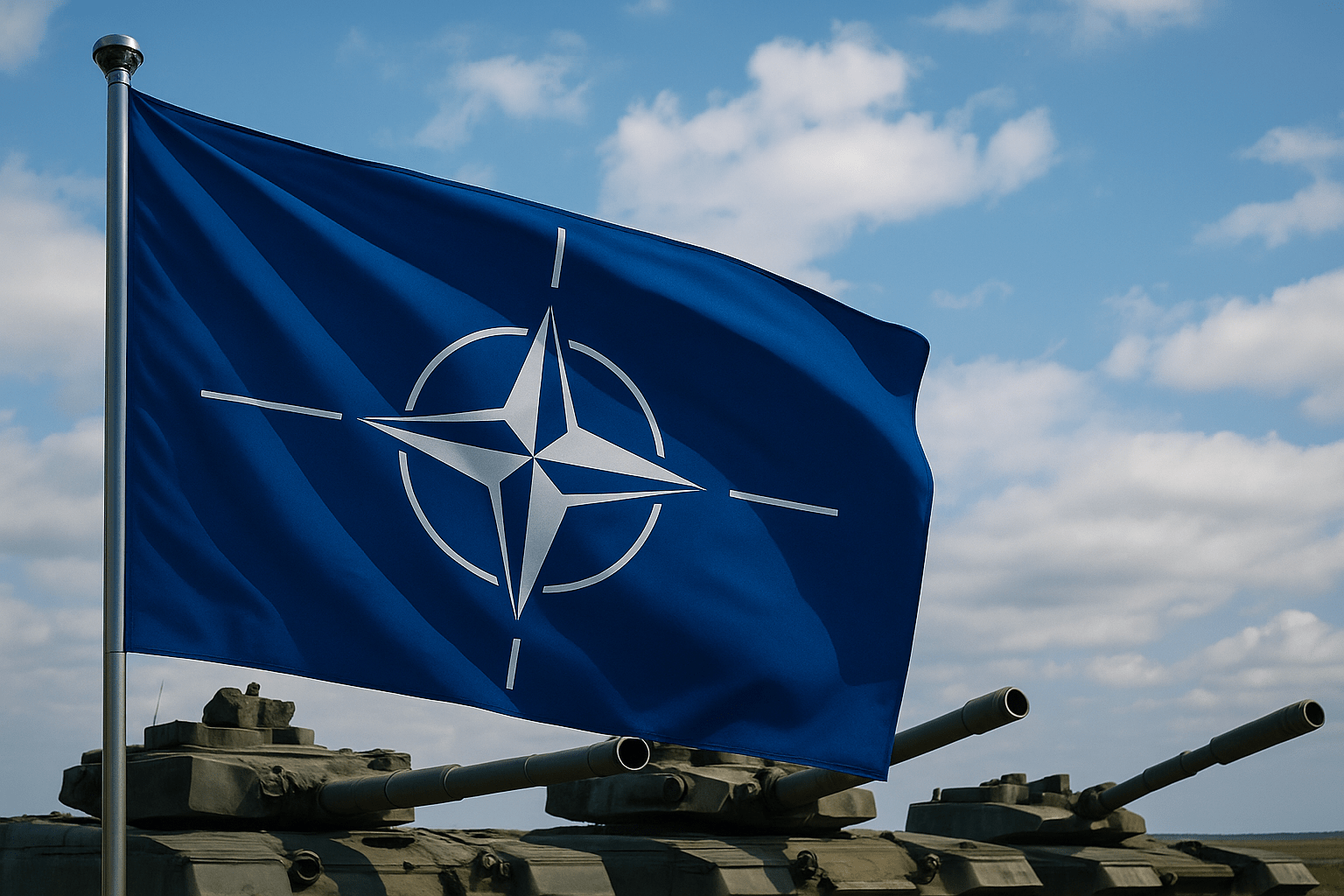
To challenge calls for increased military spending in the current geopolitical climate is to risk being labelled naïve, if not disingenuous. Critics are quick to suggest that any hesitation to ramp up defense budgets is out of touch with the threats posed by Russia, China, or a fragmenting world order marked by volatile crises in the Middle East and elsewhere.
But here is the hard truth: the truly disingenuous position is to champion massive military build-ups while pretending they will not spark arms races, entrench insecurity, or siphon away resources from diplomacy, development, and resilience-building. The most glaring gap in NATO’s strategic posture is not in weapons capacity, but in political imagination.
NATO’s push for a defense spending target of 5 percent of GDP ignores the hard lessons of history and the clear limits of military power. Military buildups, especially in the name of deterrence, have more often escalated tensions than resolved them. The newly proposed NATO target of spending 5 percent of GDP on “defense-related security” is not the calculated, forward-looking policy it claims to be. It is a reactive move that risks locking nations into a dangerous, self-reinforcing cycle of militarization.
The initiative, formally unveiled by NATO Secretary-General Mark Rutte and backed by the United States, calls for 3.5 percent of GDP to be devoted to core military spending, with another 1.5 percent allocated to complementary security infrastructure. This may sound appealing under current geopolitical pressures, but the underlying assumptions simply do not add up.
The logic behind the 5 percent target is not new. It stems from the same outdated belief that security is best achieved through ever-larger military budgets and expanding stockpiles of weapons. This notion was already questionable when NATO first adopted its 2 percent benchmark in 2014 – a figure not based on rigorous threat assessments or strategic analysis, but selected largely for its political convenience and simplicity.
The evidence since then should give serious pause. One of the central assumptions was that boosting military spending after Russia’s annexation of Crimea would deter further aggression. That assumption collapsed in 2022, when Russia launched a full-scale invasion of Ukraine. If the buildup was meant to prevent such a scenario, it clearly failed. To now double down with a 5 percent target suggests either strategic amnesia or a refusal to learn from experience.
The ongoing war in Ukraine underscores the flaw in this logic. NATO could have increased spending even earlier and exceeded – even doubled – the proposed 5 percent target, yet it would still be constrained by a reality that no amount of firepower can overcome: the presence of Russia’s nuclear arsenal. No number of tanks, jets, or missile systems can erase the fundamental truth that any military effort pushing too far toward Russia’s defeat risks crossing thresholds that could lead to nuclear use.
NATO members already devote more than $1.3 trillion annually to defense, a staggering figure that exceeds the combined military spending of the rest of the world. Even if one were to add together the defense budgets of Russia and China, the total would still fall far short of NATO’s.
What, then, would a further surge in spending accomplish? What exactly do advocates of the 5 percent target expect to happen? That China will quietly scale back its ambitions? That Russia will interpret NATO’s buildup as a purely defensive posture?
The security threats most often cited – whether from Moscow or Beijing – are not a function of NATO’s military weakness, but of broader geopolitical tensions that cannot be resolved through firepower alone. Doubling down on defense budgets in this context does not signal strength, it signals strategic inertia.
Moreover, framing the 5 percent target as a necessary response to an increasingly unstable world obscures the more likely outcome: that it will entrench an arms race dynamic and divert public resources from more effective, long-term investments in human and global security.
Arms races are reciprocal. One side’s buildup is seen as a provocation by the other, prompting countermeasures and heightening the risk of confrontation. For every new shield, a sharper spear. Does this dynamic still require explanation more than 35 years after the end of the Cold War?
Across Europe, a new development demands closer scrutiny: the European Union’s Readiness 2030 agenda. Launched in March 2025 as part of the ReArm Europe plan, it seeks to mobilize up to 800 billion euros through 2030. The European Commission has since proposed a “Defence Readiness Omnibus” to fast-track permitting, streamline procurement, and enable rapid deployment of funds.
If implemented, it would mark an unprecedented fiscal and industrial shift, one that cements Europe’s rearmament trajectory and warrants a clear-eyed assessment of its long-term implications.
Canada is no exception. It recently announced plans to meet the 2 percent target five years ahead of schedule. Some view this as a long-overdue correction. But the push to double that figure to 5 percent would represent not only a major fiscal shift, but also a profound reordering of national priorities.
Public resources are finite. Every dollar allocated to military hardware is a dollar not spent on climate resilience, healthcare, education, diplomacy, or peacebuilding. These are not luxuries. They are essential components of human and global security, just not ones captured by traditional defense metrics.
Even more troubling is the growing tendency to subordinate diplomacy and international law to military force. The erosion of arms control agreements, the weakening of conflict prevention tools, and the declining support for multilateral diplomacy are all symptoms of this trend. NATO appears increasingly willing to define security through a military lens, sidelining the broader toolkit required to address today’s complex threats.
Security in the 21st century cannot be reduced to weapons and defense budgets. The most urgent threats – climate breakdown, cybercrime, pandemics, food insecurity, authoritarianism – require cooperation, not confrontation. They demand foresight, not firepower. Fighter jets cannot stop rising seas. Missiles cannot counter disinformation or rebuild public trust.
Leadership today is not about who can spend the most, but who can think beyond spending. It means recognizing that real security comes from prevention, diplomacy, and sustainable development, not just from overwhelming force.
NATO members should resist the pressure to adopt the 5 percent target simply because it is loudly promoted. What is needed now is not another arbitrary benchmark, but a careful reassessment of what security really means, and the courage to pursue it through evidence-based policies, not reflexive militarization.
Embracing the 5 percent target as a benchmark of sound policy, while ignoring its predictable consequences is not just disingenuous, it is strategically reckless.
Cesar Jaramillo is Executive Director at SANE Policy Institute.