
Iran’s Thick Red Line
by Eldar mamedov & Cesar Jaramillo | May 15, 2026
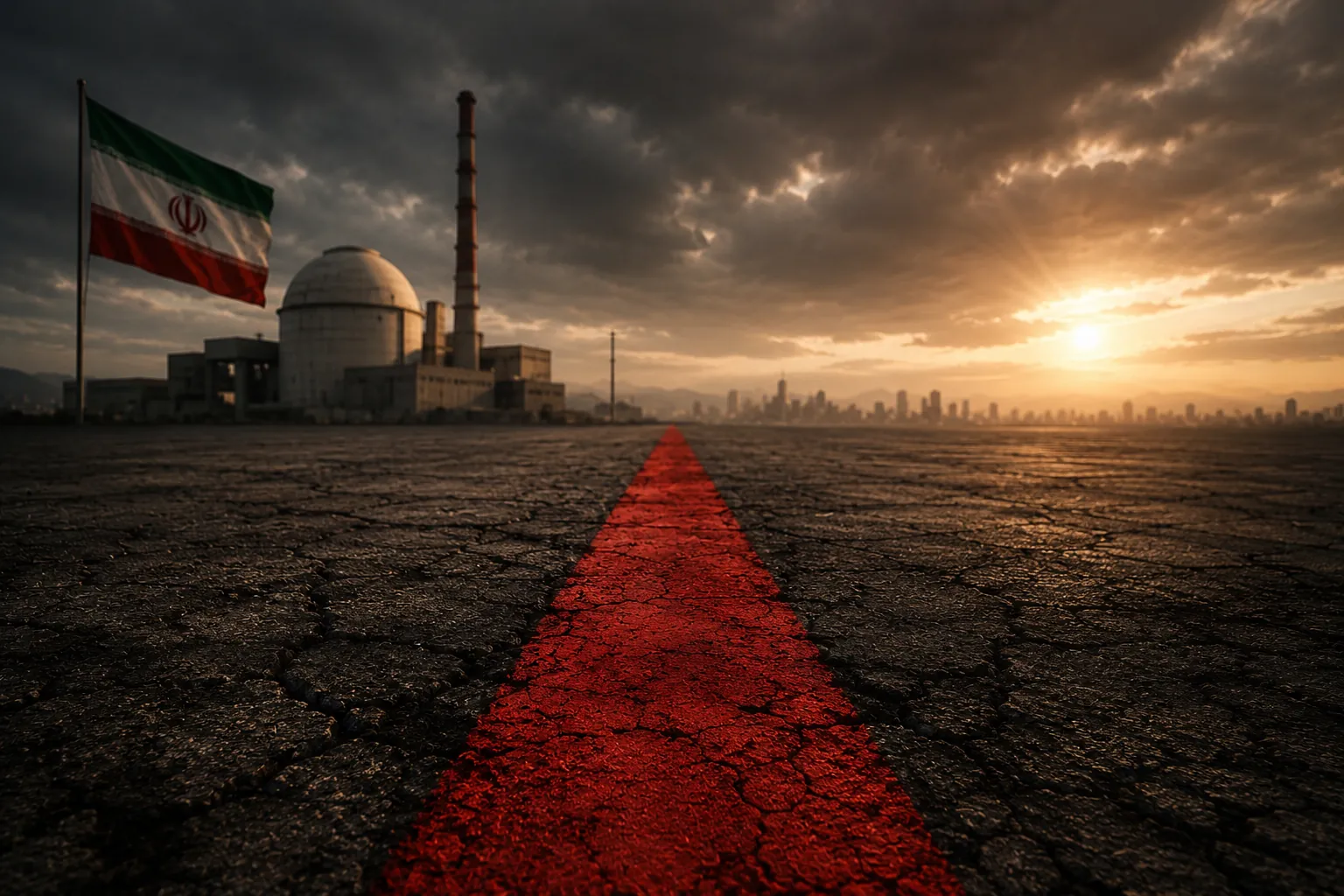
Donald Trump has rejected Iran’s latest proposal after talks in Islamabad, while continuing to insist on a maximalist demand: zero domestic uranium enrichment.
But there is a fundamental problem with this approach. On this issue, Iran’s position has remained remarkably consistent. Tehran has repeatedly signaled its willingness to provide assurances against weaponization and accept extensive monitoring and verification measures, but not to renounce domestic enrichment.
That distinction matters. For years, the stated American objective was preventing Iran from acquiring a nuclear weapon. Over time, however, Washington’s position drifted toward something much broader and much closer to the long-standing Israeli demand: no enrichment capability at all on Iranian soil. That shift dramatically narrowed the space for diplomacy.
We were among the last Western analysts to visit Iran before the Israeli and U.S. strikes in June 2025. As part of a small Pugwash delegation engaged in Track II diplomatic efforts, we heard directly from senior Iranian officials and influential figures, including Foreign Minister Abbas Araghchi and Javad Zarif, former vice-president for strategic affairs, longtime foreign minister, and a key architect of the 2015 Iran nuclear deal.
Their message was remarkably consistent: Iran did not seek nuclear weapons, and short of giving up enrichment, everything else was negotiable.
Limits on enrichment levels, intrusive verification, international monitoring, technical arrangements, regional frameworks, and even multinational enrichment consortiums were all discussed as possible areas for compromise. But abandoning enrichment on Iranian soil was treated not merely as a technical concession, but as a question of sovereignty, scientific achievement, and national dignity.
At the time, this position was also consistent with U.S. intelligence assessments, which continued to state that Iran was not actively building a nuclear weapon.
Yet rather than building on that opening, Washington increasingly aligned itself with a position Tehran viewed as fundamentally unacceptable. The result was predictable. Diplomacy narrowed, mistrust deepened, and the eventual descent into war became more likely.
The June 2025 war did not solve this problem. It intensified it. The conflict eliminated Supreme Leader Ayatollah Ali Khamenei, whose fatwa against nuclear weapons had long formed an important part of Iran’s official non-proliferation posture, alongside its obligations under the Nuclear Non-Proliferation Treaty, which Iran ratified in 1970.
The current Iranian leadership may well reassess aspects of nuclear doctrine after enduring direct military confrontation with both Israel and the United States. Wars often strengthen the perceived value of deterrence, particularly when regime survival itself appears under threat. The lesson many in Tehran are likely drawing is not that resistance failed, but that vulnerability invites attack.
But the central point remains: the war did not change Iran’s position on enrichment.
Nor did it produce the strategic collapse many in Washington and Tel Aviv appeared to anticipate. The Iranian state survived. No mass uprising materialized. The government absorbed extraordinary military punishment and remained operational. From Tehran’s perspective, the United States and Israel failed to achieve their core political objectives.
That experience appears to have reinforced Iran’s conviction that conceding on enrichment after the war would amount to surrendering politically what its adversaries failed to achieve militarily.
Even after the devastation of the 2025 conflict, Iranian officials continued pursuing negotiations and signaling openness to diplomacy. Talks resumed in Geneva in early 2026. Then came renewed strikes and the relaunching of the war under Trump in February 2026.
The pattern became increasingly difficult for Iranian officials to ignore: Iran would come to the table, and the other side would bomb.
The more recent Islamabad talks reflected a similar dynamic. Iran reportedly signaled openness to renewed limits, verification mechanisms, phased understandings tied to sanctions relief, and additional guarantees against weaponization. But Tehran again insisted that domestic enrichment was non-negotiable.
Trump rejected the proposal outright. His administration now argues that divisions between “hardliners” and “moderates” inside Iran explain the diplomatic deadlock. But that interpretation misses the point. Tactical disagreements may exist within the Iranian system, as they do in any government, but on enrichment there appears to be broad consensus across the political spectrum.
No Iranian negotiating team is likely to accept the complete dismantlement of domestic enrichment capabilities after surviving a major war fought, in part, precisely over that issue.
Iran also emerges from the conflict believing it withstood the worst the United States and Israel could inflict while preserving the state and much of its strategic infrastructure. Whether or not that assessment is entirely accurate matters less than the fact that it shapes Tehran’s negotiating posture.
If war failed to move Iran’s red line on enrichment, it is difficult to see what will.
This does not mean diplomacy is impossible. Iran still faces immense economic pressure. Sanctions relief remains urgently important for reconstruction and long-term stability. Regional mediation channels through Oman, Pakistan, and Turkey remain active.
A negotiated settlement remains conceivable. But it would require a return to more realistic objectives.
The alternatives are deeply dangerous. Washington can continue demanding zero enrichment and walk away without a deal. Iran, in turn, can continue moving sensitive parts of its nuclear program further underground and further beyond transparency mechanisms.
That trajectory points toward one of two outcomes: another war, or eventually an Iranian nuclear weapon capability emerging outside meaningful international oversight. Neither outcome would improve regional or global security.
The broad outline of a viable agreement has long been obvious: constrained enrichment, intrusive verification, robust monitoring mechanisms, and sanctions relief tied to compliance.
Such an agreement would still be vastly preferable to the alternatives now taking shape. The tragedy is not that diplomacy was impossible. It is that maximalism, war, and shifting political red lines may once again make a negotiated settlement unattainable precisely when it remains most necessary.
Eldar Mamedov is a non-resident fellow at the Quincy Institute for Responsible Statecraft and former foreign policy adviser at the European Parliament. Cesar Jaramillo is Executive Director of SANE Policy Institute. Both are members of the Pugwash Council, the governing body of the Nobel Peace Prize-winning Pugwash Conferences on Science and World Affairs.