
Sudan’s Forgotten Catastrophe
by María Pía Devoto | May 12, 2026
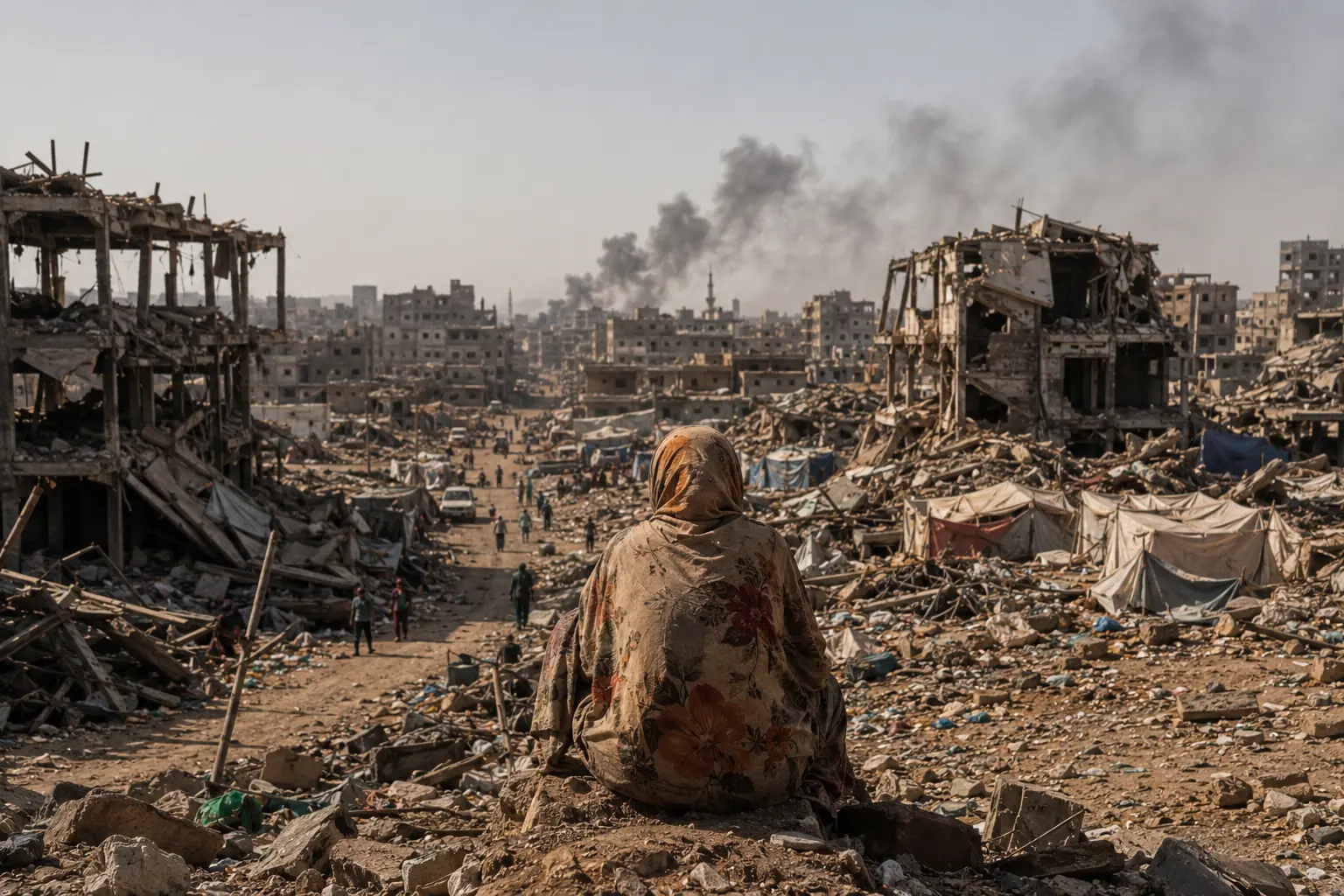
While global attention remains fixed on the war in the Middle East, another devastating conflict continues largely unnoticed: Sudan’s civil war, now entering its third year. The humanitarian consequences are among the worst in the world. Thousands have been killed, approximately 14 million people displaced, including 11 million internally, and nearly 30 million face acute food insecurity.
Despite the scale of the suffering, Sudan rarely occupies a central place in international political debate or media coverage. Yet the country today represents one of the clearest examples of how prolonged violence, foreign interference, arms transfers, and geopolitical competition can converge to produce a catastrophic humanitarian crisis with little meaningful international response.
Sudan has rarely known lasting peace since before its independence in 1956. The country experienced civil war from 1955 to 1972, again from 1983 to 2005, and is now engulfed in a third catastrophic conflict with no clear resolution in sight. The roots of these wars are complex and longstanding: religious and regional divisions, competition over natural resources, access to the Nile River, and persistent foreign interference intersect with internal struggles for power and control.
The country’s strategic importance is considerable. Sudan possesses significant oil reserves, gold deposits in Darfur, and untapped uranium and rare earth resources. Its access to the Red Sea and agricultural potential further increase its geopolitical value. These realities have attracted external actors whose economic and strategic interests often outweigh humanitarian concerns. Sudan’s location also makes it strategically relevant to regional powers seeking influence over trade routes, maritime access, and political alignments in northeast Africa and the Middle East.
In 1989, Omar al-Bashir seized power through a military coup, ushering in a period marked by brutal repression, including the genocide in Darfur. Government-backed Arab militias carried out some of the worst atrocities. These militias later evolved into what is now known as the Rapid Support Forces (RSF), initially created to counterbalance the regular army and suppress dissent before being formally institutionalized in 2013.
In 2018, mass protests erupted against al-Bashir’s rule. The uprising was violently repressed by both the Sudanese Armed Forces (SAF) and the RSF, though the two forces ultimately coordinated to remove al-Bashir from power. A transitional government was established in 2019 with the promise of future elections, but tensions quickly emerged over power-sharing arrangements. The RSF cultivated a populist image in opposition to Khartoum’s traditional elites, while the army aligned itself more closely with those same power structures.
International pressure pushed for elections in 2023 and for the gradual integration of the RSF into the regular armed forces. Neither side, however, accepted subordination to the other. The result was the outbreak of a third and exceptionally violent civil war. Since then, urban warfare, attacks on civilian infrastructure, mass displacement, and the collapse of essential services have devastated large parts of the country.
A War Fueled From Abroad
The conflict has also become deeply internationalized. Weapons, ammunition, drones, military equipment, and air defense systems continue to flow into Sudan, sustaining the fighting on both sides. At the same time, foreign actors benefit from access to Sudanese gold, strategic port concessions along the Red Sea, and potential naval facilities. Economic and geopolitical interests continue to fuel the war.
Darfur has been subject to a United Nations arms embargo since 2004, most recently extended until September 2026. Yet the embargo has proven both inadequate and routinely violated. The conflict now extends far beyond Darfur, and open-source investigations (including videos posted on TikTok, X, and Telegram) have helped document the transfer and use of prohibited weaponry. Social media platforms have, paradoxically, become an important source of evidence for identifying weapons systems and tracking violations of international restrictions.
According to Amnesty International, RSF footage has shown Chinese-made guided bombs and AH-4 howitzers that appear to have entered Sudan after the current war began in 2023. The United Arab Emirates has been widely accused of facilitating these transfers through Chad. Data from SIPRI indicates that the UAE was the only known importer of AH-4 howitzers produced by Norinco, the Chinese state-owned arms manufacturer, prior to the conflict.
Other foreign weapons systems have also been identified in the war. French defense technology has reportedly appeared on U.S.-manufactured armored vehicles, while weapons originating from Russia and Turkey have likewise surfaced in the conflict.
Reports concerning illicit Sudanese gold flows have also implicated international commercial networks extending beyond the region, including links to the United States. Meanwhile, the Wagner Group – now operating under the name Africa Corps – has expanded its involvement on behalf of the RSF, supplying troops, ammunition, and air defense systems, largely through Libya. Satellite imagery analyzed using European Copernicus data has shown repeated movements between southeastern Libya and Sudan consistent with arms transfers and logistical support.
The Sudanese Armed Forces, for their part, have deployed Turkish Bayraktar drones. Egypt has also increased its support to the SAF, particularly as RSF advances threatened the Red Sea corridor. Russia, meanwhile, appears to be shifting its support toward the SAF in pursuit of long-term strategic interests, including a possible naval base in Port Sudan. Pakistan reportedly suspended a major arms agreement with Sudan under pressure linked to Saudi Arabia and Western actors.
Sudan’s war is therefore no longer simply an internal conflict. It has become a proxy struggle shaped by regional rivalries, arms transfers, and geopolitical competition. Civilians, meanwhile, remain trapped between armed actors pursuing military and political objectives at enormous human cost.
Yet despite the scale of the suffering, international attention and humanitarian mobilization remain profoundly inadequate. Initiatives such as the Berlin humanitarian conference last April raised only a fraction of what is needed, particularly when compared with the vast military expenditures being directed toward other conflicts. Humanitarian agencies continue to warn of famine risks, collapsing healthcare systems, and severe shortages of aid access across large areas of the country.
There is no immediate end in sight. Civilians continue to bear the overwhelming burden of the war. Sexual violence has been systematically used to terrorize communities, and credible reports indicate that war crimes – and potentially crimes against humanity – have been committed by multiple parties to the conflict. Entire communities have been uprooted, while millions of Sudanese face profound uncertainty about their future.
Concrete measures nevertheless remain available.
The UN Security Council should expand the current arms embargo to cover all of Sudan rather than Darfur alone, while strengthening monitoring and enforcement mechanisms. International Criminal Court jurisdiction should also be broadened to encompass crimes committed throughout the country. More sustained diplomatic pressure is also needed on external actors supplying weapons or logistical support to the warring parties.
At the same time, the Arms Trade Treaty (ATT), which prohibits arms exports where there is a substantial risk they could facilitate violations of international humanitarian law or human rights, is being undermined. State parties such as France face serious questions regarding transfers linked to the United Arab Emirates, which has repeatedly been accused of supporting the RSF.
All arms transfers that risk contributing to atrocities in Sudan should be immediately suspended. Sudan’s catastrophe cannot remain invisible. Sustained international attention, meaningful diplomatic pressure, and a serious commitment to humanitarian assistance are urgently needed. Without them, one of the world’s gravest crises will continue to unfold largely in silence.
María Pía Devoto is Director of the Association for Public Policies (APP) and founding coordinator of the Human Security Network of Latin America and the Caribbean (SEHLAC).